By Jake Brill, consultant, William Murray
Hospitality technology has never had more attention. AI, automation, data platforms, loyalty tools and team tech are all moving quickly, and the pressure on operators to keep up is only growing.
But one thing was clear at HosTech 2026 – operators are not interested in technology for technology’s sake.
Across sessions covering AI, data, loyalty, labour, growth and marketing, the same question kept coming through: what problem does this actually solve?
That shift matters. In a sector still navigating rising costs, labour pressure, tighter margins and changing guest expectations, technology is being judged less on how impressive it sounds, and more on whether it makes hospitality businesses measurably better.
Practical beats futuristic
AI was everywhere at HosTech, but the most compelling examples were not the most futuristic. They were the most useful.
Operators are already exploring AI for troubleshooting, reporting, forecasting, scheduling, queue management, product availability, personalisation and guest service. But the mood was not blind optimism. The strongest examples were grounded in clear use cases, clean data and team adoption.
That distinction is important.
AI is not a magic fix for broken systems. It only works when the foundations are right. If the data is poor, the problem is unclear or teams do not understand why a tool has been introduced, adoption quickly stalls.
For hospitality brands, the opportunity is significant – but the starting point should not be “how do we use AI?” It should be “where are we losing time, money or consistency, and could AI help?”
Data is only valuable if it drives action
Data was another recurring theme. Most hospitality businesses are not short of it. They have sales data, booking data, loyalty data, guest feedback, labour data, Wi-Fi data, CRM data and more.
The issue is not collection. It is translation.
The operators getting it right are moving away from static dashboards and oversized reporting packs. Instead, they are looking for insight that reaches the right person, at the right moment, in a format that helps them make a decision.
That is a crucial point for suppliers and tech partners. More information is not always more useful. In a busy hospitality environment, the best data does not just explain what happened. It helps teams decide what to do next.
Growth needs simplicity, not more complexity
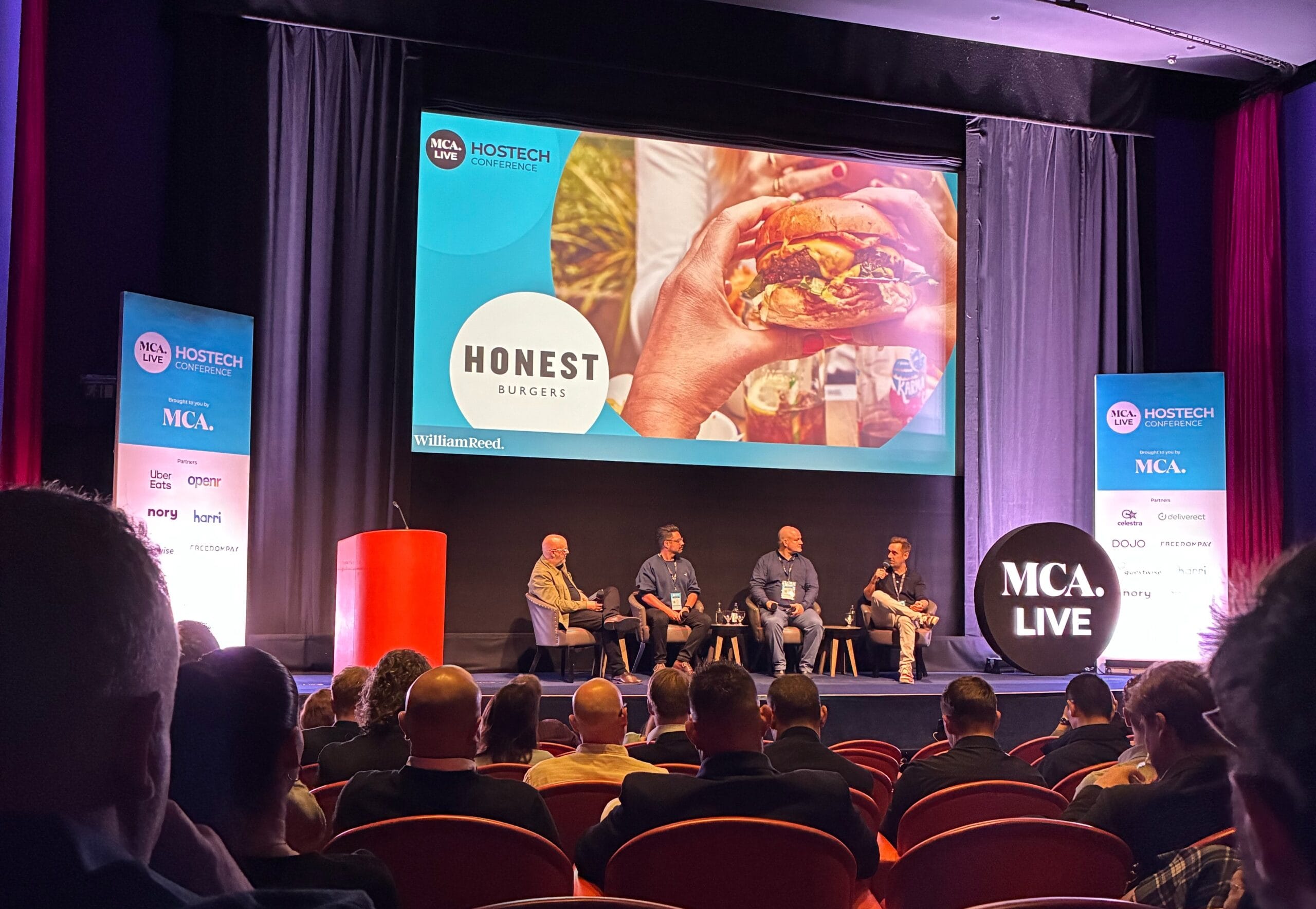
The sessions from fast-growing brands including Popeyes, Fireaway, Sandwich Sandwich and Dave’s Hot Chicken reinforced another important lesson: scaling does not mean adding more systems.
In fact, the bigger a business gets, the more damaging disconnected technology can become.
The strongest tech stacks are not necessarily the biggest or the flashiest. They are the ones built around how the business actually runs, with systems that talk to each other, support frontline teams and stay dependable under pressure.
For growing operators, that means making tough choices. What should be built in-house? What should be bought from a specialist? What adds value? And what simply adds another login?
The answer will look different for every business, but the principle is the same: technology should make operations easier, not heavier.
The human side still matters
One of the strongest themes from the day was people.
Whether the discussion was around AI, team tech, loyalty or marketing, the same truth kept surfacing: tools only work if people use them.
That applies to employees as much as guests. Managers need platforms that reduce admin. Frontline teams need to understand why new systems matter. Guests need digital experiences that feel relevant, not robotic.
The best framing from the day was technology as a co-pilot. Not replacing hospitality, but removing friction. Not taking over the human parts of the experience, but giving teams more time and confidence to deliver them properly.
That is where the real opportunity sits: using technology to make hospitality more efficient, without making it feel less human.
Hype can launch a brand. It cannot sustain one
The final marketing session, featuring Sandwich Sandwich and Dave’s Hot Chicken, brought a different but connected perspective.
Both brands showed the power of hype, social content, user-generated momentum and community-led growth. Queues, viral posts and influencer attention can all create huge launch energy.
But the session also made clear that hype has a shelf life.
Long-term performance depends on product quality, consistency, speed of service and a brand personality that does not disappear as the business scales. The brands that hold attention are the ones that give people something worth sharing – and then deliver when customers turn up.
For marketers, that is the key lesson. Hype is not just about noise. It is about creating the conditions for people to care, talk, visit and return.
What this means for hospitality brands
HosTech 2026 painted a picture of a sector becoming more disciplined in how it approaches technology.
The excitement around AI, data and automation is still there, but operators are asking harder questions. Does it solve a real problem? Will teams use it? Can it scale? Does it improve the guest experience? Does it protect margin? Does it make the business better?
That should be the filter for every hospitality technology conversation.
The future of hospitality tech will be defined by the tools that solve real operational problems, support teams and help brands deliver better experiences more consistently.