Growth in foodservice is becoming harder to achieve. Operators are navigating cost pressures, skills shortages, fragmented customer needs and ever-higher expectations, while suppliers are competing for attention in a complex value chain.
So how can suppliers become more valuable partners to operators – and, in doing so, create opportunities for their own growth?
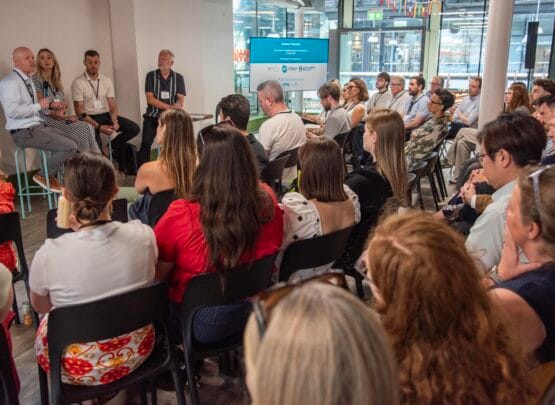
The answer from our recent Arena round table at Everton’s Hill Dickinson Stadium in Liverpool, was clear: suppliers need to move beyond selling products and focus much more closely on solving problems.
As Tim Oakes, head of out of home, FTG and new business UK at Kepak, put it: “Actually, what’s your problem? How can we help you solve it?” That shift in mindset – from product-led selling to problem-solving – was a strong theme of the discussion.
Start by understanding the operator
Being easy to deal with sounds straightforward, but it requires suppliers to understand the realities of the businesses they are serving.
Carol Rhead, marketing and insight director at Dine Contract Catering, said: “Growth will come from a number of things. One is, and it sounds really basic, but being easy to deal with. So, someone who feels like they’re on your side and are helping you solve your problems.”
But, importantly, “to help you solve your problems, they need to understand you”.
That means getting closer to operators, spending time in kitchens and listening to the people actually delivering the service. Tim added that some of Kepak’s strongest growth opportunities had come from “spending a day in the kitchen, finding out what’s happening” and looking at where it might be going wrong.
Lorna Stutchbury, marketing manager at Vegetarian Express, highlighted the same need from a supplier perspective. “The marketing teams just need to get closer to our customers and not be back-room support almost,” she said, with a particular focus on the sectors offering the greatest growth potential.
Don’t throw the product over the fence
One of the biggest frustrations discussed was the gap between selling a product and making it work operationally.
Carol described the familiar scenario where a supplier effectively gets a product “over the fence” and collects the commission. “And then we’re left: right, okay, what are we doing with this?”
For operators, the questions that follow are critical: Is the pack size right? Is it easy to deliver? Does it work operationally? Does it save time or labour? Does it fit the customer proposition?
Suppliers that can answer those questions – and provide the evidence – have an opportunity to become much more valuable.
As Carol said: “Evidencing things is really important. Really key to that.”
Janice Talkington, co-founder of Talkington Bates, reinforced the importance of value that does not create additional work for operators. “How can you add more value without costing them finance, costing them time?” she asked.
Bring operators into innovation earlier
Slow NPD processes can also be an obstacle to growth. Tim noted that “traditionally NPD is the kind of thing taking 18 months, which is too long”.
His suggestion was simple: involve operators earlier, at pilot or concept stage, and use their businesses as testing environments.
Carol described operators as “a really underutilised resource for NPD”, adding: “You’d be quite surprised how open we’d be to it, so long as you make it easy for us.”
Jo Witchell, commercial foodservice marketing manager at Tilda Foodservice, offered a supplier perspective on how this can work. With a strong connection between Tilda’s sales and marketing teams, she said: “If we pick up on things like this, then we can act on them quite quickly.”
That close connection with the market can help suppliers identify emerging trends and respond before the opportunity passes.
Connect the dots
Effective collaboration also means engaging across functions rather than relying on a single contact. David Fradgley, head of marketing UK & offshore at Aramark, explained: “The way I approach it is get across group. So, I’d have procurement, marketing and ops, because then you get a realistic answer.”
Hayley Miller, marketing director at Sodexo UK & I, highlighted the importance of bringing procurement into the conversation early, particularly when responding to fast-moving trends. “Lining it up with procurement is always the battle,” she said, flagging the need to ensure that good ideas can actually be implemented.
That joined-up approach can prevent good ideas from becoming stuck between sales, marketing, procurement and operations.
It also opens the door to suppliers working together. As Gurtej Gill, head of foodservice at Nomad Foods, put it when discussing menu-led solutions: “Partner up.”
Mel Connell, marketing director at Notpla, talked about another part of the equation: communicating the value created across the chain. For suppliers, she said, “the complexity is how do I communicate with the right people the value add that we can make?”
Demonstrate the commercial impact
The discussion also covered the need for marketing to demonstrate a clearer contribution to commercial growth. Mel explained: “I’ve had to show the actual commercial difference marketing makes along the pipeline.” For suppliers, that means connecting marketing activity to tangible outcomes – from conversion and advocacy through to customer growth – and using evidence from real-world trials to demonstrate the value being created.
Make growth easier for operators
The opportunity for suppliers is to make life easier while creating solutions that deliver meaningful value for operators.
That means understanding the operator’s problem, involving the right people early, proving the value of a solution and working collaboratively across the value chain.
As Graham Caldwell, marketing manager at Country Range Group, put it: “Half the battle is not knowing it’s there. If we could bridge that gap, then make life a lot easier for everyone.”
For suppliers, effective partnership means getting closer to operators, understanding what matters to them and helping turn those insights into practical solutions that support growth.