Uncategorized

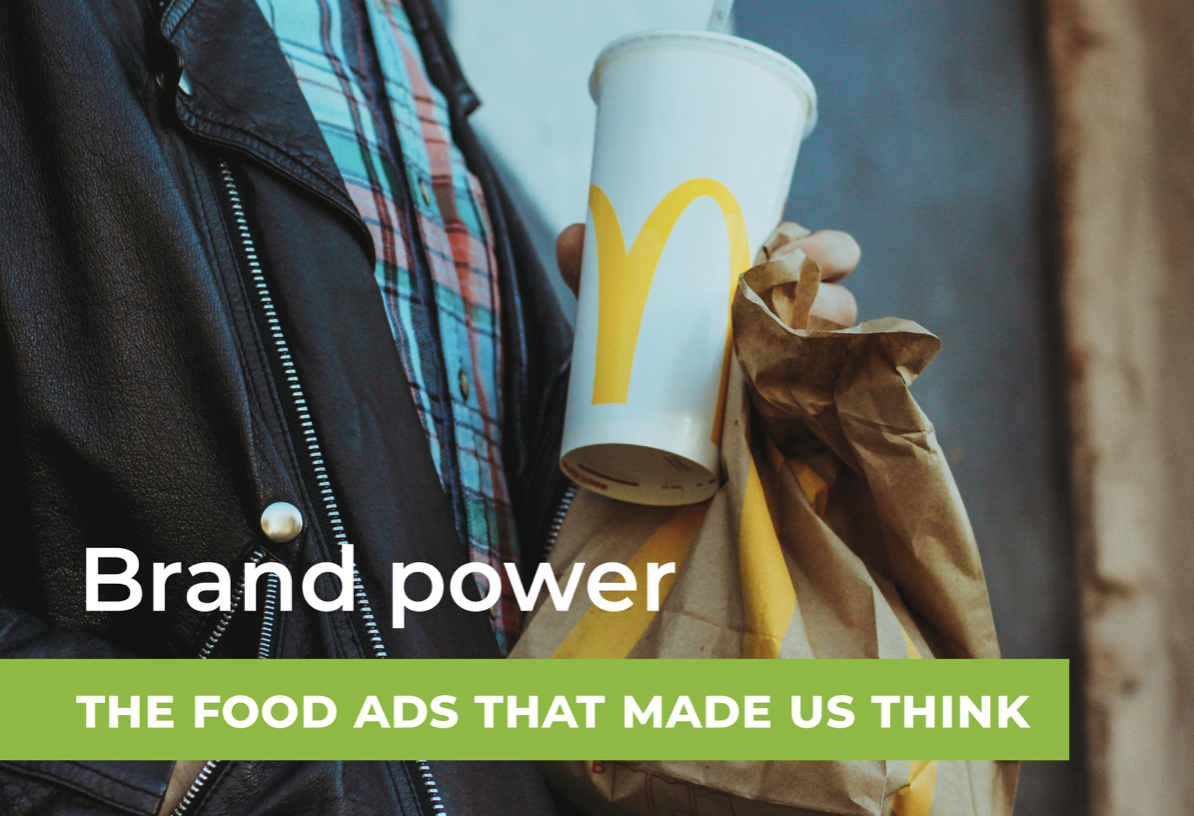
Brand power: the food ads that made us think

May 2019


Screenshot 2019-05-31 at 12.28.26.png


Twelve years since M&S’ infamous ‘This is not just food’ campaign was taken off the air, it’s making a comeback this Spring/Summer – but with a twist. For many, the campaign’s much mimicked phrase “This is not just food, this is M&S food” became a household joke. Thanks to the campaign, M&S food signified indulgence, quality and comfort.  

This got us thinking, what makes a great advert? Does it make you sit up and think? Humour you? Get you to take action? 

The team weighed in on memorable ads of past and present. Ads that inspire, humour and intrigue us (or that just make us really damn hungry!). 


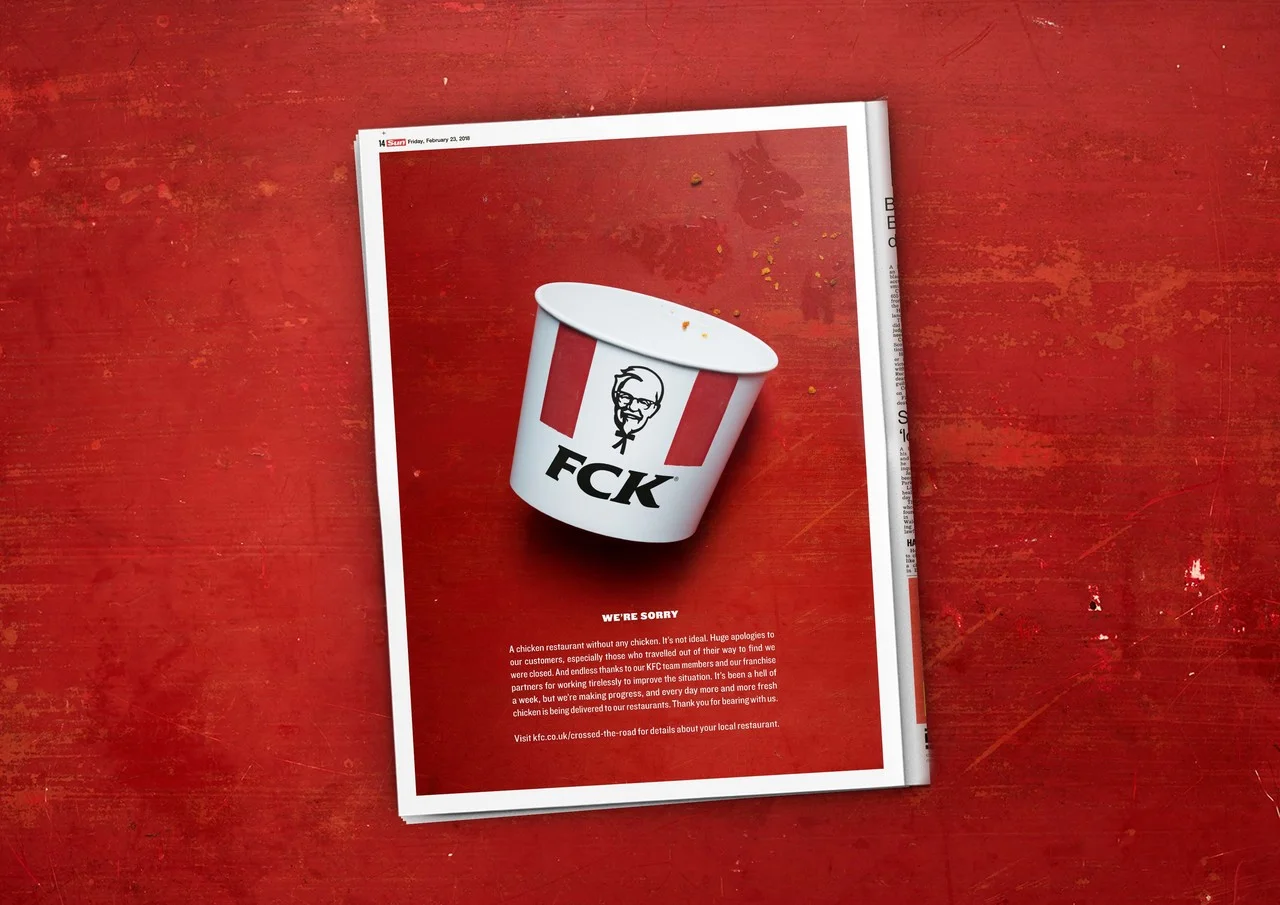
KFC – FCK  
91752737-8aee-4f95-b123-18c1716d8574_large.jpg

“For me it’s got to be KFC’s FCK campaign. Hot off the heels of running out of chicken, they placed a cheeky, full place apology ad in The Metro. Sometimes it pays to be bold, admit you’re wrong, and say sorry. Crisis management at its best.” 

Fiona Hamilton – associate director 
 

guys+were+flattered.jpg

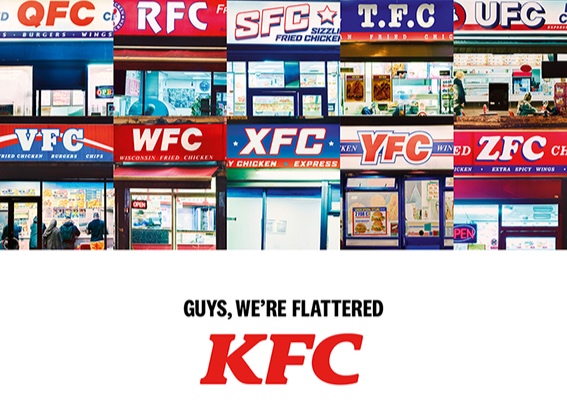
KFC – ‘Guys, we’re flattered’ 

“This campaign takes aim at all the other little chicken shops that try to be like KFC. Very simple but quite cheeky and very clever.” 

Lois Spall – senior account manager 


Australian Bananas and Aussie Mandarins fruit adverts 
Screenshot 2019-05-31 at 12.17.40.png

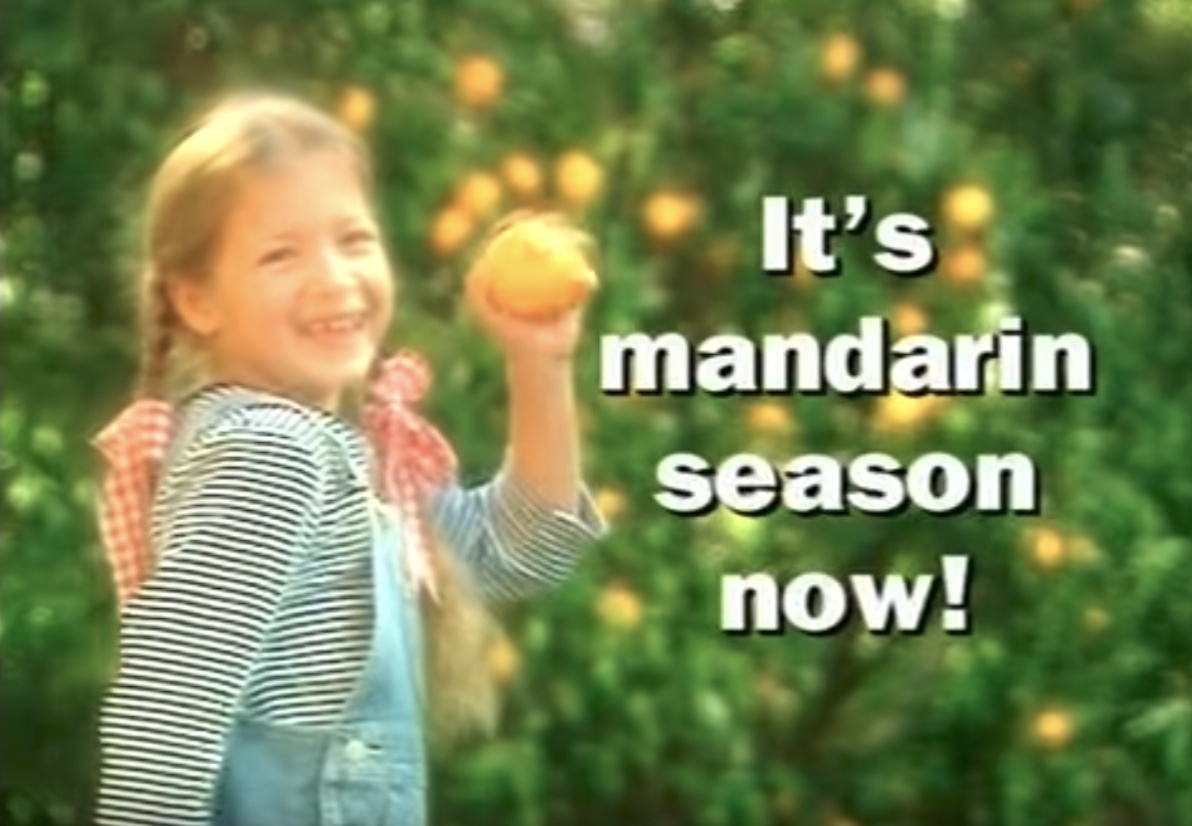
“When I was growing up in 90s Australia there were some classic ads played during after school TV shows to encourage kids to eat fruit. The most popular – and enduring, if my renditions around the William Murray fruit bowl are anything to go by – are the banana and mandarin adverts. They clearly worked, I still eat mountains of both!” 

Anna Berry – account manager 


Carlsberg’s – “Probably NOT the best beer in the world” rebrand and NPD  
s3-news-tmp-77017-untitled_design_76_3--2x1--940.png

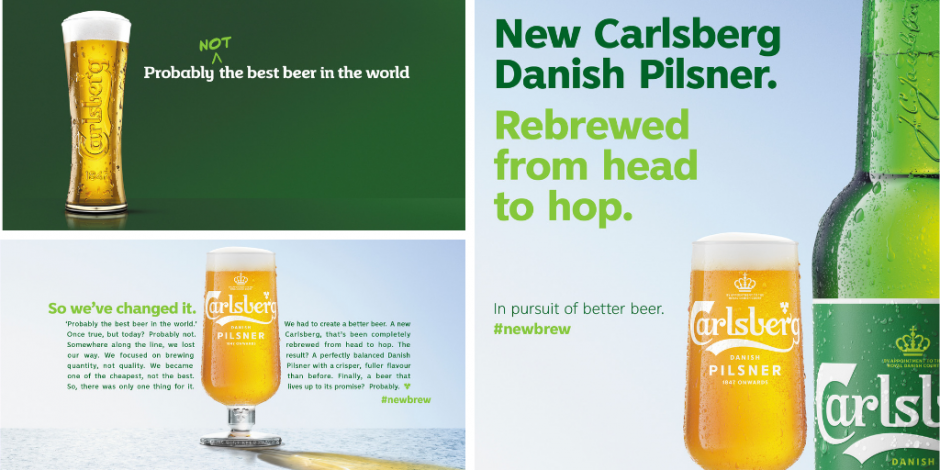
“I was quite impressed with the new Carlsberg advert – probably not the best beer in the world. Recognising that they’ve gone after profits rather than quality so they held their hands up and used it as an angle to promote their new quality product.” 

Emma Hawley – account director

“It’s refreshingly honest and great brand perception. I personally don’t drink Carlsberg because I don’t think it stands up to the taste of my preferred Heineken or Peroni (which is more expensive) however as Carlsberg have read consumers’ minds and acknowledged this, it makes me want to try the new drink in order to see if they have changed.” 

Charlie von Wedl – new business development exec 


KFC – Try one before you turn vegan 
Burger2-800x1024.png

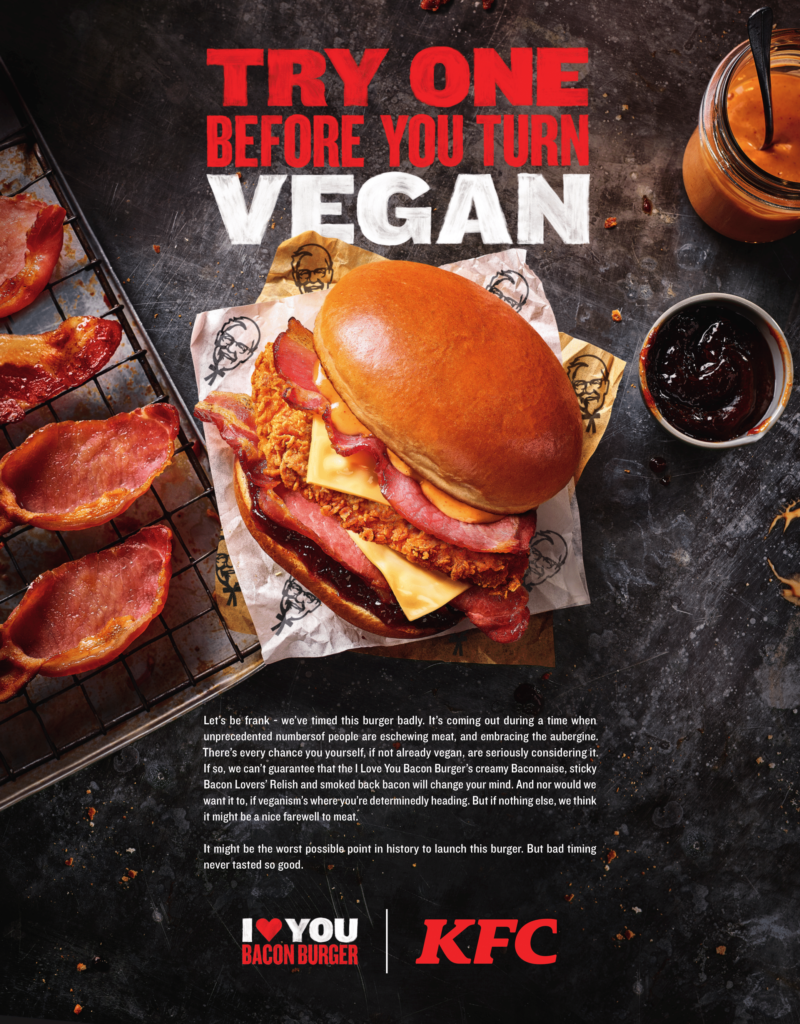
“A cheeky little ad. I love the way it takes a trend and uses it to stimulate customer loyalty. Nice one KFC!” 

Anita Murray – CEO 


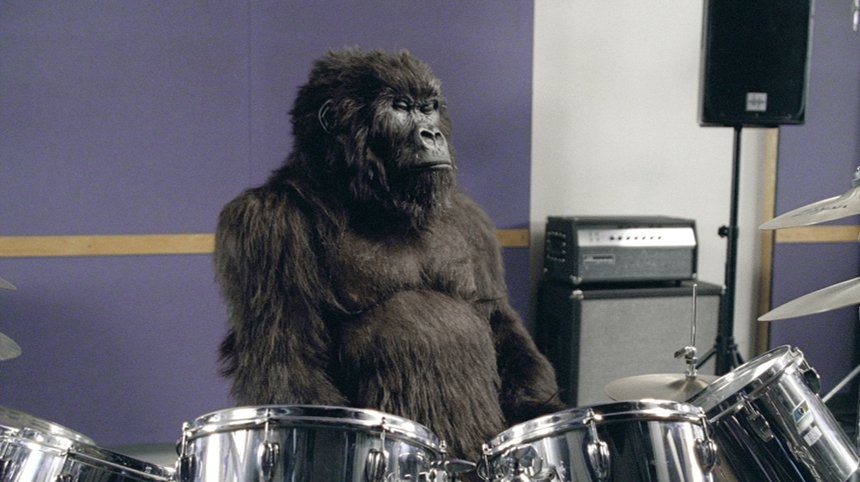
Cadbury – Gorilla  
83724_8270850066764cba97a66abcd221d583.jpg

“The Cadbury’s Gorilla ad is without a doubt one of my favourite ads of all time. Simply put, it was just a commercial that had a large gorilla sitting at a set drums who goes on to play along to Phil Collins “In the Air Tonight” but really it was just so much more than that. I loved it as it really broke the mould and moved away from the traditional advertising approach that can often feel overwhelming with its messaging.  

“This ad is simplistic yet so powerful – which explains why it went viral. It captures your attention immediately and evokes feeling whilst being entertaining. How can you not watch it over and over?” 

Victoria Joseph – account manager 


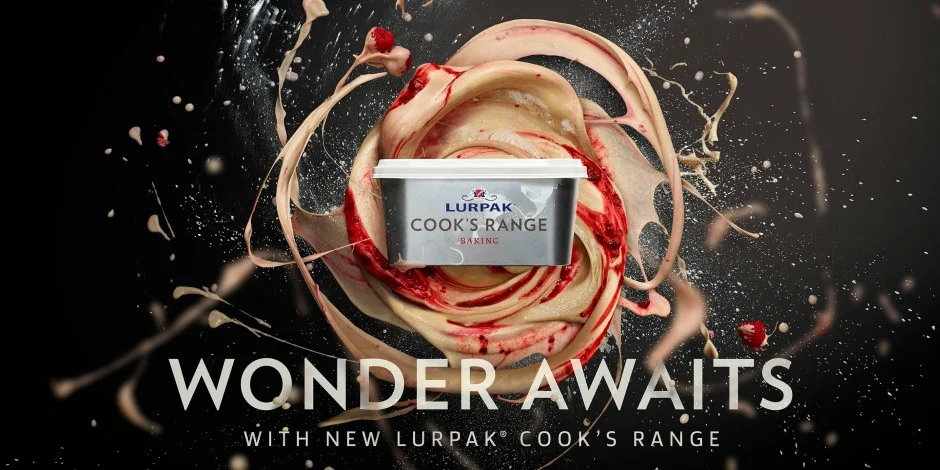
Lurpak – Be wonderful and wise  
public-drum_creative_review-157143-main_images-L1--2x1--940.jpg

“Lurpak adverts always catch my attention. For such a simple product, home cooking is brought to life with Lurpak’s signature style – vivid colours, short and sharp frames and crisp sound effects. I really like the ‘Be wonderful and wise’ TV ad – it encourages anyone to get creative in the kitchen and you simply can’t look away!”   

Rosie Carr – content strategist  

It’s safe to say that KFC’s bold, brave and cheeky ads were a big hit at WM HQ. Kudos to its ad team, as well as Carlsberg and Lurpak. Big, bold and brave really does pay off.  

 

Insights & Trends

Planning for 2027? Don’t start with the marketing plan 

September 2026

by Anita Murray, CEO, William Murray  

For food, drink and hospitality businesses, 2027 budgets are starting to take shape. Campaigns are being mapped out and calendars are tentatively filling up with launches, events, content and communications activity. 

Before deciding what marketing activity your business needs next year, there is a more important consideration: What does the business need to achieve – and what could get in the way? 

The more specific the objectives and obstacles, the easier it becomes to make useful, strategic decisions about marketing and communications that will help businesses grow with greater certainty. 

Six questions to take into your 2027 planning 

  1. What are our most important growth objectives?

Be specific about what the business needs to achieve. Which customers, markets, products or relationships matter most? Where does growth need to come from, and what would meaningful progress look like by the end of 2027?  

Whether the ambition is to win new customers, enter a market, grow a category or create demand for innovation, the marketing plan needs a clear commercial destination. 

  1. What are the biggest obstacles to achieving them?

Where is growth most likely to get stuck? It could be competitive pressure, customer perception, differentiation, credibility, market position, lack of influence or something operational that communications needs to help address.  

Identifying the obstacle changes the conversation from “What should we do?” to “What needs to change?” 

  1. Has our market position changed?

Markets move quickly. Competitors evolve, customer expectations shift and propositions that once stood out can become familiar. Ask whether the position that worked previously will still be compelling in 2027. 

That means looking beyond your own brand. What are competitors now claiming? What do customers value? Where has the market become crowded? What new expectations have emerged? 

  1. What do our customers actually value now? 

Planning often begins with what a business wants to say. A stronger starting point is understanding what customers need to hear, believe or experience before they will change behaviour. 

Our 2026 From Visibility to Influence research found a clear gap between the messages suppliers believe they are communicating and how those messages can be experienced by operators. Suppliers talked about innovation, sustainability, partnership and understanding their customers. Operators told us they wanted clearer value, practical solutions, proof and transparency. 

That gap has commercial consequences. 

In a pressured foodservice environment, operators are already dealing with labour shortages, cost pressures, sustainability demands and supply chain challenges. Communications that add complexity or make broad claims without evidence are unlikely to earn much attention. 

The implication for 2027 planning is important: understanding customer priorities should shape the communication strategy before channels and campaigns are selected. 

  1. Where do we need greater trust, authority or influence? 

Awareness can tell you that people recognise a brand. It tells you much less about whether they trust it, value its expertise or will consider it when making a decision. 

Our research found that operators and industry influencers respond strongly to credible evidence, practical application and genuine industry contribution. 

Innovation, for example, has greater value when it demonstrates how it can make an operation easier, more efficient or more resilient. Sustainability claims become more credible when businesses can show evidence, acknowledge trade-offs and communicate progress honestly. 

For businesses planning for 2027, this raises useful points: Where do we need to influence decisions, and what would give us the authority to do so? That might involve customers, chefs, procurement teams, wholesalers, industry bodies, media or other stakeholders. 

  1. Finally, what communications activity will make a difference?

Once the growth objective and obstacles are clear, the role of communications becomes much easier to define. 

Perhaps the business needs stronger thought leadership to establish authority in a category. Perhaps it needs evidence-led communications to build credibility around a new proposition. Perhaps customer voices and practical demonstrations would do more to build confidence than another broad awareness campaign. 

And sometimes the answer will be to do less. The important thing is that activity has a clear job to do. 

Better planning starts further upstream 

Visibility has value, but commercial growth depends on what happens after someone sees you. Do they understand your relevance? Do they believe your claims? Do they trust your expertise? Will they involve you in the conversation when a decision needs to be made? 

Those questions deserve a place in the planning process. 

Before you lock down your 2027 marketing plan, make sure you have identified what is most likely to get in the way of achieving your growth objectives. That gives you a strategic basis for deciding where communications, marketing and other forms of commercial activity can help you achieve growth with greater certainty. 

Our Market Authority & Growth Roadmap is designed to help businesses take that step back: clarify the growth objective, identify the positioning, credibility, visibility and influence barriers that may be limiting growth, and establish where authority-building activity should focus next. 

Planning for 2027? Talk to us about where growth could get stuck before you decide what activity comes next.