Uncategorized

A guide to keeping furloughed staff engaged during lockdown and avoid losing your best talent

May 2020


Screenshot 2020-04-15 at 10.38.10.png

“Who knew what the word furlough meant pre-Covid?  Jump forward a few months and over 6 million people in the UK have been furloughed.” 


Who knew what the word furlough meant pre-Covid?  Jump forward a few months and over 6 million people in the UK have been furloughed and most of us know someone who has been affected by it. Eight in ten workers in the hospitality sector have been furloughed and the news that furlough is being extended beyond June has been positively welcomed. At the same time, many hospitality businesses are concerned about losing quality staff during the lock-down according to CGA’s Business Leader Survey. 

For the people who are on furlough, it is already a time of uncertainty and with the scheme’s extension, they are likely to feel more anxious than ever. They will be looking to their employees for both information and reassurance. The way you behave now towards all of your employees is likely to have a lasting impact on them and how they feel towards your business as things start to recover. 

If you haven’t already developed a flow of communication for furloughed employees –  do it now. If you are already doing it, keep re-evaluating how you can continue to keep furloughed workers engaged over an extended period of time. 

The big question – especially now some employees may be furloughed for a further three months – is how you communicate with furloughed staff. And how you continue to make them feel valued when, under the rules of the scheme, you cannot communicate anything work related while they are on furlough. 

Here are some helpful points from the Chartered Institute of Public Relations on communicating with furloughed employees which I hope you will find useful. 

Tips for communicating with furloughed employees

·      Treat furloughed workers as a separate target audience. Ask them what information they’d like to receive from you. What do they need to hear?

·      Possible content themes might include company updates, furlough updates, wellbeing tips and signposting to support that’s available and opportunities for online training or volunteering. 

·      Before you do any communication to furloughed employees, make sure you speak to your legal and HR representatives and seek their advice. It’s essential that your organisation is clear on what is and isn’t allowed when people are on furlough.


·      Avoid using work email addresses for communication where possible. Some organisations are asking furloughed employees to opt-in with their personal email addresses if they want to receive updates from the organisation. Again, this isn’t mandatory, and colleagues don’t need to share if they don’t want to. 


·      If you have a mix of furloughed and non-furloughed employees, then you will need to make sure that non-furloughed employees are aware of the rules in place and also who has been furloughed in their teams, so they don’t chase for work or information. 


·      It might also be worth asking your employees to add a note to their out of office about being on furlough. Or get your IT team to add on their behalf. 


·      A few organisations have set up specific WhatsApp groups for furloughed employees so they can provide wellbeing guidance and keep them updated with official updates. Before you set-up this group, make sure you check with your legal team. Colleagues should not be using their work number to join this group, and no work-related information should be shared. 


·      If you want to keep colleagues informed with non-related work such as voluntary opportunities, wellbeing tips, etc. then you may want to consider creating a newsletter specifically for this group, so they still feel connected to the organisation. Again, this should only be opt-in and not mandatory. 


·      Line managers need to be briefed about what is and isn’t ok in terms of content to share with their teams and also support those in their teams who might be impacted. It’s also important that they don’t forward things on to those on furlough from the organisation as this would be counted as work related content.




Insights & Trends

The $367 million stat that stopped me in my tracks

April 2026

By Rachel Taylor, managing director 

Did you know that in a single week, high quality CEO thought leadership can drive an average of $367 million in shareholder value? 

Me neither. But according to this article by Axois, the American news website and media company, real money and real momentum is there for the taking – if you do it well. 

Why this stat matters to me as a comms specialist (and why it should matter to you, too) 

Thought leadership is more than just op-eds and LinkedIn posts. It’s a strategic lever to fuel business growth.  

When a leader says something clear, useful and human, it changes how customers, investors, partners and employees behave. That ripple turns into meetings, sales, deals, hires, and yes, market value. 

What good thought leadership actually looks like: 

  • A sharp point of view. Not safe. Not vague. Something people can repeat. 
  • Plain language. No jargon. Real sentences that sound like a human. 
  • A useful takeaway. People should leave knowing what to do next. 
  • Perfect timing. The same idea can flop or fly depending on when and where it lands. 

How we help leaders turn thoughts and ideas into business impact 

We treat thought leadership as a strategic engine that delivers real commercial results. We advise and guide, prototype, test and measure.  

Here’s the short version of how we do it: 

  • Find the signal. We dig until we find the gold – that one idea that only you, or your CEO, can own. 
  • Make it sing. We shape that idea into a crisp, repeatable message that energises and inspires your stakeholders.  
  • Launch it smart. We create targeted amplification strategies that demand attention and reach all the right audience groups with laser-like precision. 
  • Measure the right things. We’re not about vanity metrics here at William Murray.  Quality, sentiment, inbound conversations, sales leads and business signals matter to us. 

Let’s make your voice heard

If you want your ideas – or your leader’s ideas – to open doors, change minds, influence customers and drive business growth, we can help you find the signal and make the market listen.  

No fluff.  

Just ideas that move people – and numbers. 


Insights & Trends

Arena Networking Navigator is back for 2026

January 2026

We know first-hand that careers in foodservice and hospitality are built on relationships. That’s why we’re proud to be returning for a second year as partners of the Arena Networking Navigator Programme 2026, alongside Arena and Performance Works International. 

Following a successful inaugural year, the programme is back with renewed momentum and a clear purpose: to continue addressing a recognised skills gap among early-career professionals who have not always had access to the in-person networking experiences that are so vital to long-term success in our industry. As the way we work evolves, the ability to form meaningful, career-defining connections remains a critical skill – and one that doesn’t always come naturally. 

Launching in February 2026, the six-session hybrid programme once again blends expert-led online learning with high-impact, face-to-face experiences at two flagship Arena events. The structure is designed to build confidence step by step, ensuring delegates can put theory into practice in real-world industry settings. 

The programme begins with the fundamentals: understanding why networking matters, what makes a strong first impression and how to become a more effective, authentic networker. Delegates then focus on refining their elevator pitch, learning how to break the ice, prepare for events and adapt their approach for in-person and online environments. 

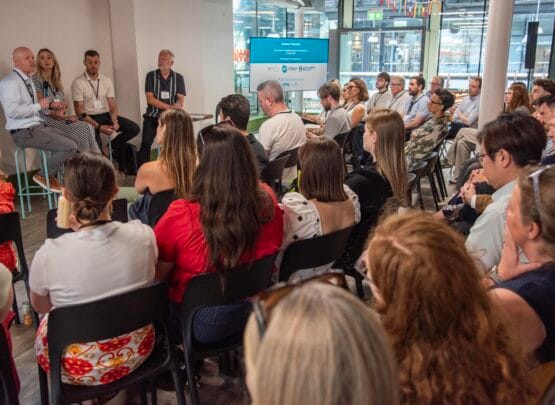
A core strength of the Networking Navigator is the opportunity to practise these skills live. The Arena Futures Live Event provides a supportive space for delegates to connect with peers and industry leaders, while Networking 101 sessions tackle practical challenges such as entering and exiting conversations, steering discussions with confidence, following up effectively and approaching new contacts. 

Preparation for one of Arena’s most prestigious events is another key milestone. Delegates will set clear objectives, rehearse introductions and receive practical guidance ahead of the Arena Savoy Lecture at The Savoy, London. The programme concludes with a graduation ceremony at the Savoy Lecture itself, where participants are invited on stage to receive their certificates. 

Our own Olivia Charles was one of the successful 2025 cohort. Here’s what she had to say about it: “Before joining the Networking Navigator programme, networking felt daunting. The course pushed me outside my comfort zone and helped me realise that most people feel exactly the same. We are all simply there to connect. It shifted my mindset, strengthened my confidence and gave me practical tools to approach people, hold meaningful conversations and navigate interactions with ease. It has been a genuinely valuable experience for both my personal and professional development.”

Priced at £950 + VAT, including attendance at both Arena Futures and the Arena Savoy Lecture, the Arena Networking Navigator Programme is a powerful investment in future industry leaders. 

Head to area.org.uk for details.