Peer-to-peer communication: Dealing with video and multiple content channels
February 2021
“The pandemic has caused a digital revolution, moving the industry forward about five years. ”
As some forms of media disappear, others thrive. The explosion of platforms such as Instagram Live, YouTube and TikTok means we are faced with an overwhelming amount of videos, webinars and podcasts.
And this year we’ve all become more accustomed to online and the use of video (and making sure our above the desk image is Zoom or Teams ready!) – this isn’t going to change. From massive virtual events to 30-second how-to videos, our world has become more virtual and more visible.
How to win with so many content channels
It’s time to think about your visual brand as a business leader and as a business. We are working at several levels including advising chefs on the kit they need to easily and cost effectively run simple video demos, through to running webinars and on to creating that winning mix of live and pre-recorded content to run online events.
Video isn’t going anywhere in 2021 and we need to be fluid in our communications. The medium opens up the floor to all kinds of content – and all kinds of content creators. And it’s not just video – to win in a more competitive marketing environment will take a strong content strategy. Using webinars, videos, blogs and podcasts to your advantage will be crucial to successfully getting your messages across.
Marc Convey, managing director of partner agency 23 Digital, says:
“The pandemic has caused a digital revolution, moving the industry forward about five years. The use and power of video will continue to evolve in 2021 with a growing integration of animation and augmented reality. This evolution will impact the way all companies communicate internally and externally and transform how events are run and delivered. We’ve gone from live events to only virtual events, but the key moving forward will be the hybrid event approach mixing live and pre-recorded content with animation and AR.”
It’s a short, sharp piece using our knowledge and expertise to help marketing teams plan for the year ahead. From nailing down the commercial value of activity to deciding which media channels to use.
If you want to chat through any of the points in the piece, or need any help with your PR or marketing, please get in touch.
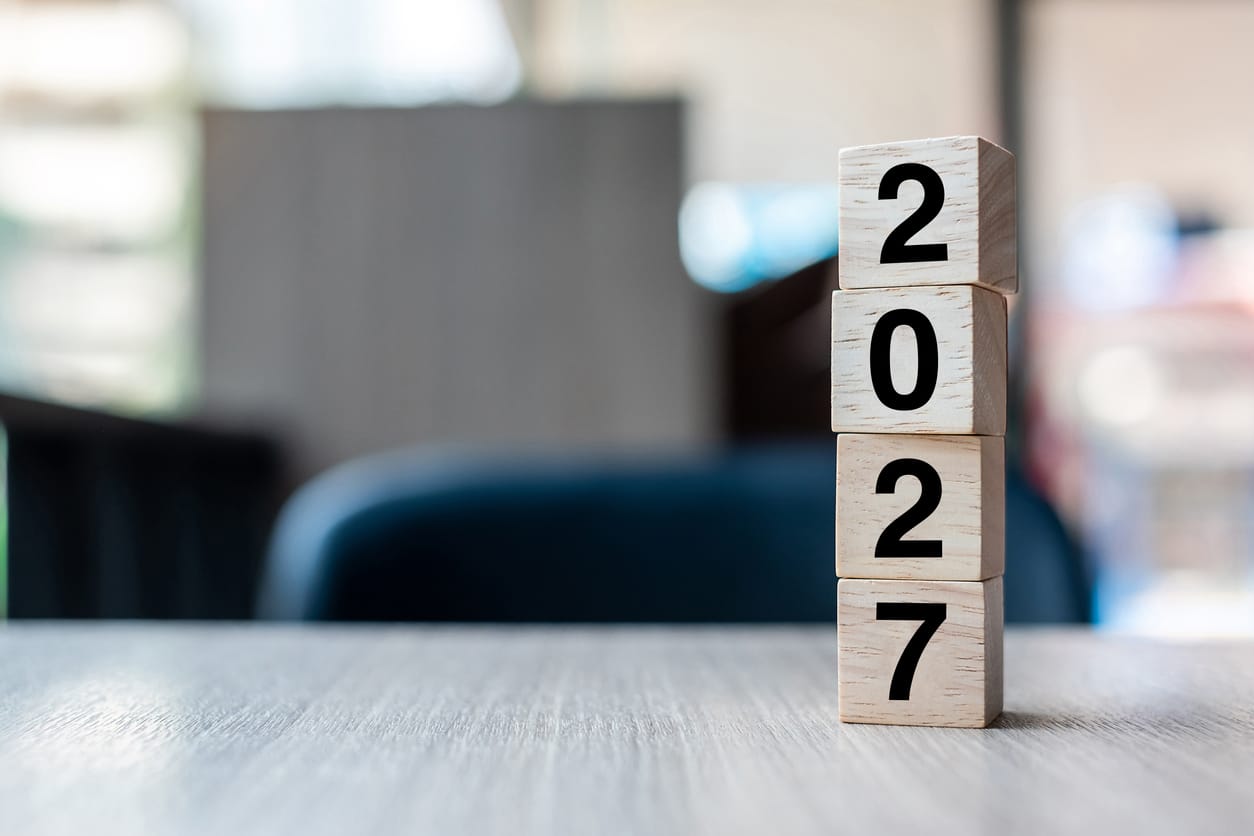
Planning for 2027? Don’t start with the marketing plan
September 2026
by Anita Murray, CEO, William Murray
For food, drink and hospitality businesses, 2027 budgets are starting to take shape. Campaigns are being mapped out and calendars are tentatively filling up with launches, events, content and communications activity.
Before deciding what marketing activity your business needs next year, there is a more important consideration: What does the business need to achieve – and what could get in the way?
The more specific the objectives and obstacles, the easier it becomes to make useful, strategic decisions about marketing and communications that will help businesses grow with greater certainty.
Six questions to take into your 2027 planning
What are our most important growth objectives?
Be specific about what the business needs to achieve. Which customers, markets, products or relationships matter most? Where does growth need to come from, and what would meaningful progress look like by the end of 2027?
Whether the ambition is to win new customers, enter a market, grow a category or create demand for innovation, the marketing plan needs a clear commercial destination.
What are the biggest obstacles to achieving them?
Where is growth most likely to get stuck? It could be competitive pressure, customer perception, differentiation, credibility, market position, lack of influence or something operational that communications needs to help address.
Identifying the obstacle changes the conversation from “What should we do?” to “What needs to change?”
Has our market position changed?
Markets move quickly. Competitors evolve, customer expectations shift and propositions that once stood out can become familiar. Ask whether the position that worked previously will still be compelling in 2027.
That means looking beyond your own brand. What are competitors now claiming? What do customers value? Where has the market become crowded? What new expectations have emerged?
What do our customers actually value now?
Planning often begins with what a business wants to say. A stronger starting point is understanding what customers need to hear, believe or experience before they will change behaviour.
Our 2026 From Visibility to Influence research found a clear gap between the messages suppliers believe they are communicating and how those messages can be experienced by operators. Suppliers talked about innovation, sustainability, partnership and understanding their customers. Operators told us they wanted clearer value, practical solutions, proof and transparency.
That gap has commercial consequences.
In a pressured foodservice environment, operators are already dealing with labour shortages, cost pressures, sustainability demands and supply chain challenges. Communications that add complexity or make broad claims without evidence are unlikely to earn much attention.
The implication for 2027 planning is important: understanding customer priorities should shape the communication strategy before channels and campaigns are selected.
Where do we need greater trust, authority or influence?
Awareness can tell you that people recognise a brand. It tells you much less about whether they trust it, value its expertise or will consider it when making a decision.
Our research found that operators and industry influencers respond strongly to credible evidence, practical application and genuine industry contribution.
Innovation, for example, has greater value when it demonstrates how it can make an operation easier, more efficient or more resilient. Sustainability claims become more credible when businesses can show evidence, acknowledge trade-offs and communicate progress honestly.
For businesses planning for 2027, this raises useful points: Where do we need to influence decisions, and what would give us the authority to do so? That might involve customers, chefs, procurement teams, wholesalers, industry bodies, media or other stakeholders.
Finally, what communications activity will make a difference?
Once the growth objective and obstacles are clear, the role of communications becomes much easier to define.
Perhaps the business needs stronger thought leadership to establish authority in a category. Perhaps it needs evidence-led communications to build credibility around a new proposition. Perhaps customer voices and practical demonstrations would do more to build confidence than another broad awareness campaign.
And sometimes the answer will be to do less. The important thing is that activity has a clear job to do.
Better planning starts further upstream
Visibility has value, but commercial growth depends on what happens after someone sees you. Do they understand your relevance? Do they believe your claims? Do they trust your expertise? Will they involve you in the conversation when a decision needs to be made?
Those questions deserve a place in the planning process.
Before you lock down your 2027 marketing plan, make sure you have identified what is most likely to get in the way of achieving your growth objectives. That gives you a strategic basis for deciding where communications, marketing and other forms of commercial activity can help you achieve growth with greater certainty.
Our Market Authority & Growth Roadmap is designed to help businesses take that step back: clarify the growth objective, identify the positioning, credibility, visibility and influence barriers that may be limiting growth, and establish where authority-building activity should focus next.
Planning for 2027? Talk to us about where growth could get stuck before you decide what activity comes next.
QSRs – is a lack of local relevance stunting your growth?
June 2026
By Rachel Taylor, managing director, William Murray
I had a great day at the QSR Redcat Media and Awards Conference on 22 June 2026, listening to operators, brands and suppliers unpack the future of growth.
More data. More tech. More channels. More pressure on margins.
But walking away, one thought stuck with me:
Most QSR brands aren’t struggling to grow; they’re struggling to matter where it counts.
Growth in this sector rarely unravels in strategy decks or boardroom discussions. More often, it is won or lost site by site, in local communities and on local high streets.
Customers clustered in their differing localities don’t experience “the brand” in the abstract. They experience that single location, in a specific moment, in the context of their everyday lives. And that moment is far more fragile than many assume.
If the experience feels too generic, inconsistent or disconnected, the decision is simple: customers will be indifferent. And no one wants that.
So how do you win?
Look at how the high street is shifting and being redefined. It’s no longer just a place of convenience. It’s evolved to be something more social, more experiential and more community-driven – a space of connection, routine and identity:
where people go to break up their day
where older audiences seek a sense of connection over something simple such as a coffee and a slice of cake
where date nights, small celebrations and everyday rituals play out
where younger consumers spend time, choosing brands that say something about who they are because it’s social currency.
This all points to the evolving role QSR brands need to play. The question has moved beyond: “How do we drive footfall?” It’s now: “How do we earn a place in people’s lives locally?”
Are franchisees the most underutilised growth lever?
Many QSR brands are stronger than ever centrally – with sharper positioning to more sophisticated channels. But that strength doesn’t always translate consistently at a local level.
This is where the franchisee comes in.
They sit closer to what’s actually happening in local markets than any central team ever can. They see the nuances: how footfall shifts, how local competitors behave, what resonates culturally, customer profile types and what falls flat.
That’s the missed opportunity when it comes to your comms programme.
When franchisees are properly engaged and contribute to their localised comms plan, believe in it and are equipped to bring it to life, the difference is tangible. A QSR branch becomes embedded within its community, teams operate with more confidence and customers respond differently
Why community comms is the growth boost needed
This is where communications plays a far more important role in unlocking growth than it’s usually given credit for.
Getting under the skin of each community to shape bespoke campaigns that capture attention and win mindshare makes a huge difference in a fiercely competitive market.
Locally relevant comms strategies should not be viewed as a quick customised bolt-on task. They are a growth strategy because no two locations behave the same or expect the same things. No single playbook can account for every local nuance.
In today’s market,local relevance is the strategy.
Want to hear more?
If you’re looking at how your brand performs site by site and where the gaps are between strategy and reality, it’s worth a conversation.
At William Murray PR & Marketing, we help QSR brands close that gap, building communications strategies that actually drive behaviour, consistency and growth on the ground.