Insights & Trends

QSRs – is a lack of local relevance stunting your growth?

June 2026

By Rachel Taylor, managing director, William Murray

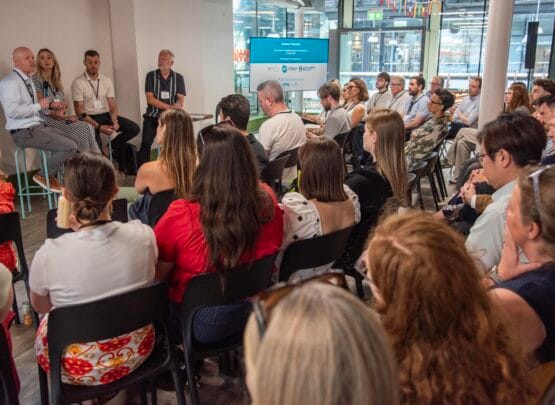
I had a great day at the QSR Redcat Media and Awards Conference on 22 June 2026, listening to operators, brands and suppliers unpack the future of growth. 

More data. More tech. More channels. More pressure on margins. 

But walking away, one thought stuck with me:   

Most QSR brands aren’t struggling to grow; they’re struggling to matter where it counts. 

Growth in this sector rarely unravels in strategy decks or boardroom discussions. More often, it is won or lost site by site, in local communities and on local high streets. 

Customers clustered in their differing localities don’t experience “the brand” in the abstract. They experience that single location, in a specific moment, in the context of their everyday lives. And that moment is far more fragile than many assume. 

If the experience feels too generic, inconsistent or disconnected, the decision is simple: customers will be indifferent.  And no one wants that. 

So how do you win? 

Look at how the high street is shifting and being redefined. It’s no longer just a place of convenience. It’s evolved to be something more social, more experiential and more community-driven – a space of connection, routine and identity: 

  • where people go to break up their day 
  • where older audiences seek a sense of connection over something simple such as a coffee and a slice of cake 
  • where date nights, small celebrations and everyday rituals play out 
  • where younger consumers spend time, choosing brands that say something about who they are because it’s social currency. 

This all points to the evolving role QSR brands need to play. The question has moved beyond: “How do we drive footfall?” It’s now: “How do we earn a place in people’s lives locally?” 

Are franchisees the most underutilised growth lever? 

Many QSR brands are stronger than ever centrally – with sharper positioning to more sophisticated channels.  But that strength doesn’t always translate consistently at a local level. 

This is where the franchisee comes in. 

They sit closer to what’s actually happening in local markets than any central team ever can. They see the nuances: how footfall shifts, how local competitors behave, what resonates culturally, customer profile types and what falls flat. 

That’s the missed opportunity when it comes to your comms programme.  

When franchisees are properly engaged and contribute to their localised comms plan, believe in it and are equipped to bring it to life, the difference is tangible. A QSR branch becomes embedded within its community, teams operate with more confidence and customers respond differently 

Why community comms is the growth boost needed 

This is where communications plays a far more important role in unlocking growth than it’s usually given credit for. 

Getting under the skin of each community to shape bespoke campaigns that capture attention and win mindshare makes a huge difference in a fiercely competitive market.   

Locally relevant comms strategies should not be viewed as a quick customised bolt-on task.  They are a growth strategy because no two locations behave the same or expect the same things. No single playbook can account for every local nuance. 

In today’s market, local relevance is the strategy. 


Want to hear more? 

If you’re looking at how your brand performs site by site and where the gaps are between strategy and reality, it’s worth a conversation. 

At William Murray PR & Marketing, we help QSR brands close that gap, building communications strategies that actually drive behaviour, consistency and growth on the ground.

News

Hospitality equipment suppliers back industry call for 10% VAT

June 2026

Foodservice and hospitality equipment suppliers have added their support to an industry-wide call for VAT in hospitality venues to be cut to 10%.

High-speed oven manufacturer Merrychef and water filter specialist BRITA Professional have backed #VATsTheProblem, an initiative spearheaded by chef Tom Kerridge calling on the government to reduce VAT for hospitality venues from 20% to 10%.

Merrychef managing director Colin Lacey said: “Operators are facing what can only be described as a relentless accumulation of cost pressures. Since Covid, the sector has absorbed significant increases in energy costs, wage inflation, National Insurance contributions and wider operating expenses, all while consumers themselves are becoming more cautious with spending.

“From our conversations with customers, the challenge isn’t a lack of ambition, it’s confidence. Businesses are being asked to grow and modernise at a time when the cost of doing business continues to rise. For many operators, it feels like death by a thousand cuts.

“Hospitality is one of the UK’s most important industries, creating jobs, supporting communities and driving economic activity. We believe measures that improve cash flow and encourage investment are critical to the sector’s future, which is why Merrychef supports the industry’s call for a reduced VAT rate for hospitality through the #VATsTheProblem campaign.”

The petition, which has more than 200,000 signatures, calls on the government to bring hospitality VAT in line with European countries such as France, Spain and Italy, where it is 10%.

BRITA Professional UK sales director Samantha Scoles added: “At BRITA, we work closely with hospitality operators, and we see first-hand the pressures they are facing. Rising costs, tighter margins and increasing operational demands continue to challenge businesses across the sector. At the same time, we see the vital role hospitality plays in communities, local economies and employment.

“We support initiatives that help create a more sustainable environment for operators to invest, grow and continue delivering exceptional experiences to their customers. That’s why we are proud to support the #VATsTheProblem campaign and the call for a 10% VAT rate for hospitality.”

Kerridge highlighted the breadth of the initiative. “This campaign reaches far deeper than just the front-line positioning of pubs, restaurants, coffee shops, bars and hotels,” he said. “We all know that hospitality is built upon relationships with supply chains. These are building blocks that the individual businesses are built upon. So, whilst this campaign hits the front end, it makes a big difference to everybody who is working or has an attachment with hospitality. We continue to thank the supply chains for all of their support.”

William Murray CEO Anita Murray encouraged the industry to get behind the initiative and support hospitality businesses.

She said: “If you haven’t signed the petition yet, now is the time. Let’s help take this campaign beyond one million signatures and send a clear message that hospitality businesses need more support.”

The campaign is also supported by major hospitality groups, including UKHospitality, the British Beer and Pub Association, the British Institute of Innkeeping and CODE Hospitality.

To sign the petition, click here.

(Image credit: AnnaNahabed)