Insights & Trends

New School Food Standards: turning regulation into opportunity 

September 2026

by Fiona Hamilton, director of strategic growth 

England’s school food landscape is entering a significant period of change. Proposed new School Food Standards are set to raise nutritional expectations, tighten controls on HFSS foods and introduce greater emphasis on compliance and enforcement. 

The potential impact  

For food and drink suppliers, the important question should be: what will schools need from us to make the new rules work? 

Operators are set to face a difficult balancing act; managing healthier options, budget constraints, portion and weight requirements, staffing pressures, allergens and operational complexity – all while still serving food pupils actually want to eat. 

As one school cook puts it: 

“It can be difficult when you’re trying to balance healthier food, tight budgets and all the different rules we have to follow – it’s an added layer to an already complex situation.” 

Can schools make new standards work? 

The sector believes they can – but previous experience shows the commercial risks of getting implementation wrong. 

Tracey Smith, CEO, Schools & Universities, Sodexo UK & Ireland, says: 

“Last time the standards changed it was a fundamental shift in the whole feeding of pupils… we all thought we wouldn’t get through it… but it was the right thing to do.” 

For Luke Consiglio, founder and CEO of education caterer, The Pantry, the impact was more challenging: 

“We saw a decrease in meal uptake, we saw an increase in food costs… I just don’t believe there’s been enough work done underneath that headline.” 

Meg Hughes, director of nutrition and sustainability at Compass Education, experienced a similar issue during a pilot: 

“We had a loss of sales of over 50% in the secondary school that did the pilot… It cost us a lot of money to do that pilot for six weeks.” 

And Deborah Batchelor, managing director and owner of education caterer Stir Food highlights the fundamental commercial measure: 

“If we go too far with the restrictions, we’re actually going to turn pupils away, because the measure of our success is uptake.” 

For suppliers, the challenge is to help caterers meet the standards without adding cost or complexity – or compromising what pupils actually want to eat. 

The opportunity 

The new standards create a clear opportunity for suppliers to think beyond the product and start solving the problems around it. 

Operators want healthier, practical solutions that work in the reality of a school kitchen – from product formats and pack sizes to allergen information, menu inspiration and operational support. 

A school cook’s wish list is revealing: 

“I’d like suppliers to make things easier for us by providing clear allergen and weight information, smaller pack sizes, more delivery options and more ideas for healthy dishes and snacks that we can actually use in schools.” 

And operators want suppliers to get closer to the reality of their businesses. 

Deborah Batchelor says: 

“Come and see what we’re actually doing… If you can reduce allergens, we will be able to choose more of it.” 

For Tracey Smith, collaboration is key: 

“How can we all collaboratively work together to look at how we can reduce that plate cost? … how can we think together using our insight and our data?” 

What this means for suppliers 

The strongest suppliers in education will be those that understand the challenges behind the standards and build their proposition around them. 

That could mean healthier products that don’t compromise taste or uptake, clearer information that makes compliance easier, formats and pack sizes designed around real school-kitchen constraints, or practical menu inspiration that helps turn compliant ingredients into food children want to eat. 

It also means getting closer to operators and understanding the problems they are actually trying to solve. 

This is where the commercial opportunity lies 

At William Murray, we help food and drink businesses turn customer insight into commercial advantage – understanding what buyers and operators need, translating those needs into stronger propositions, and creating the content, campaigns and engagement that take those propositions to market. 

The proposed new School Food Standards are a regulatory change. But also a market signal.  

The suppliers that understand this shift – and use it to solve real operator problems – will be better placed not just to support schools, but to build stronger propositions and unlock growth in education. 

Get set for success 

The standards are changing. Is your proposition ready? Let’s talk. Contact Anita Murray. 


Quotes gathered from 1:1 interview with a secondary school catering manager and the Arena Feeding the Future: Rethinking Catering in Education event  



Insights & Trends

The impact of relationships in hospitality

July 2026

By Mimi Whelan, consultant, William Murray

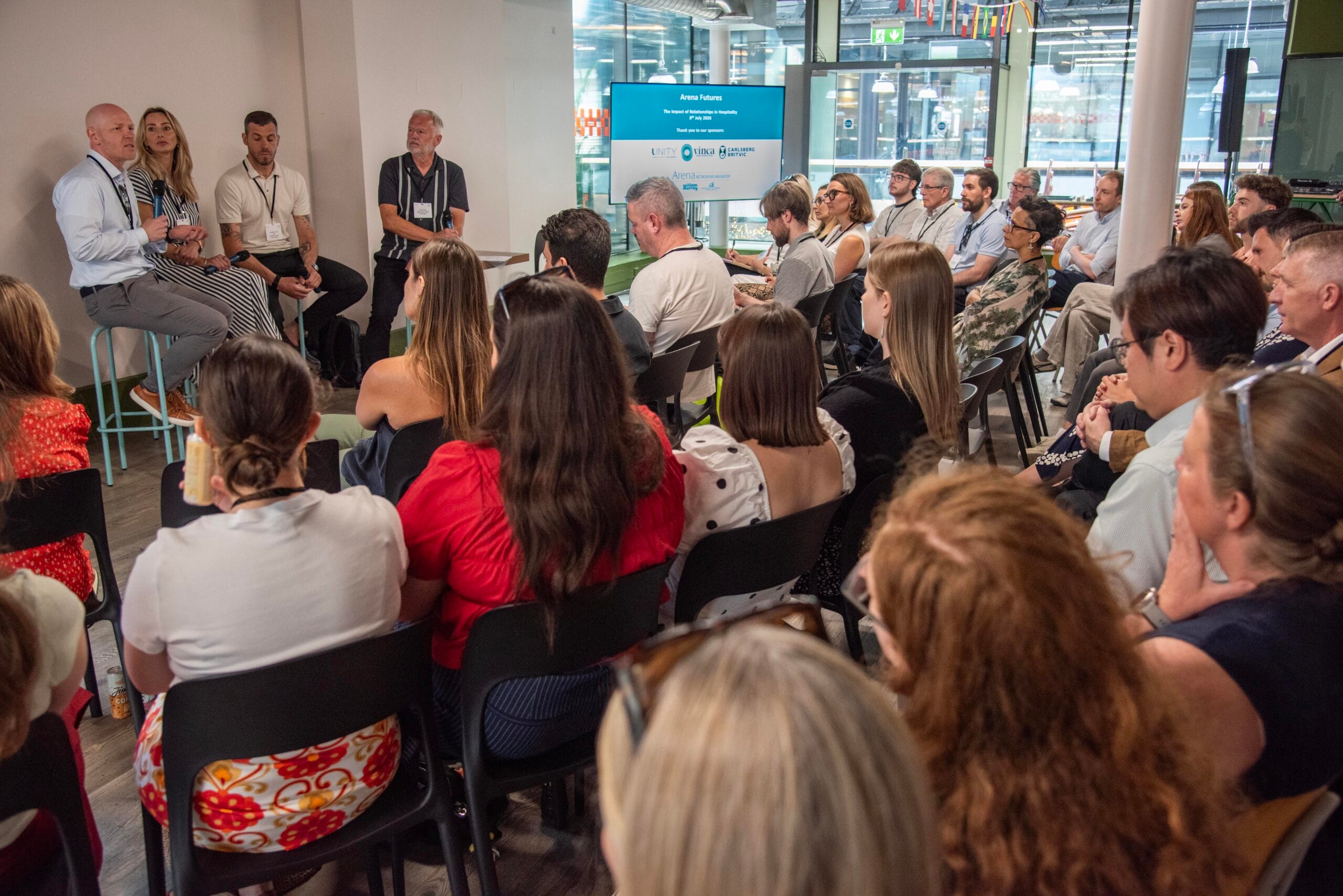
Relationships are at the heart of hospitality, shaping careers, businesses and the guest experiences that keep people coming back. That was certainly my biggest takeaway from Arena’s latest Networking Event, where members came together to hear an inspiring panel of industry leaders share the personal and professional relationships that have helped shape their success. 

Hosted by our very own Chris Dines, commercial director of William Murray PR & Marketing, the discussion brought together GianMarco Carlà, chief operating officer at Big Mamma Group, Michael Andersen, chief commercial officer at Sysco GB, and Joycelyn Neve, founder and managing director of Seafood Pub Company, for an honest and engaging conversation covering leadership, innovation, career development and the future of hospitality. 

Building relationships that last 

What stood out most throughout the discussion was the shared belief that people are hospitality’s greatest asset. Whether it’s leading teams, working with suppliers or creating memorable guest experiences, the panel agreed that meaningful relationships are the foundation of long-term success. 

I was particularly struck by the emphasis placed on creating workplace cultures built on trust, openness and honest communication. The panellists spoke about the importance of surrounding yourself with people who challenge your thinking, offer different perspectives and help you continue learning throughout your career. 

Embracing innovation while staying people-first 

Innovation was another recurring theme, with the panel discussing how businesses are evolving to meet changing customer expectations. Michael Andersen shared how suppliers are helping operators through product innovation, simplified kitchen solutions and technology that improves efficiency without compromising quality. 

Artificial intelligence naturally formed part of the conversation too. While the opportunities are significant – from streamlining recruitment and analysing customer data to improving guest communications – the panel was unanimous that technology should enhance, not replace, the human side of hospitality. Instead, it should give people more time to build stronger relationships and deliver exceptional guest experiences. 

Saying yes to opportunity 

One of the most inspiring parts of the discussion was hearing each panellist reflect on their own career journey. They spoke openly about the opportunities they had embraced, the setbacks they had faced and the lessons they had learned along the way. 

A message that really resonated with me was the importance of saying “yes”. Confidence doesn’t appear overnight – it grows through experience, taking calculated risks and being willing to step outside your comfort zone. The panel reminded us that careers are rarely linear, and that some of the greatest opportunities come from embracing the unexpected. 

Leadership, culture and confidence 

Leadership was another key theme, with every panellist highlighting the importance of investing in people. Whether leading a single venue or an international restaurant group, they all shared the view that the best leaders create environments where people feel trusted, supported and empowered to succeed. 

The conversation around confidence and self-doubt was refreshingly honest. The panellists admitted that self-doubt never truly disappears – even at the most senior levels – and encouraged attendees not to wait until they feel completely ready before pursuing new opportunities. Instead, they shared practical ways to build resilience, from leaning on trusted mentors to writing down personal goals and asking yourself, “What’s the worst that could happen?” 

The power of networking 

It was fitting that networking itself became a key topic of conversation. Rather than seeing networking as simply collecting business cards, the panel encouraged attendees to focus on building genuine relationships through curiosity, listening and offering support to others long before it’s ever needed. 

The audience Q&A brought many of these themes together, with discussions around developing future leaders, giving constructive feedback, overcoming imposter syndrome and learning from mistakes. Throughout the afternoon, one message remained clear: successful careers aren’t built by having all the answers, but by staying curious, embracing opportunities and surrounding yourself with people who help you grow. 

A huge thank you to our very own Chris Dines for expertly hosting such an insightful discussion, and to GianMarco Carlà, Michael Andersen and Joycelyn Neve for sharing their experiences with such openness and honesty. Thank you also to everyone who joined and contributed to another fantastic Arena Networking Event. 

As hospitality continues to evolve, events like these provide an invaluable opportunity to connect, learn and share experiences. As one panellist perfectly summed up and a quote I will take with me into my career: “Sometimes not knowing what to be afraid of is a powerful thing.”