“Forward Fooding has launched its Food Tech 500 – a Fortune 500 of the food tech world – lifting the lid on the sector’s ones to watch.”
Food delivery is booming, app ordering is now second nature, and society expects to eat what it wants, when it wants it.
Using science and technology to create new types of food and drink, such as plant-based proteins, lab-grown meat, snacks made from insect protein, or coffee powder made from mushrooms is now the norm. And with the market predicted to be worth $250bn by 2020, and a host of exciting innovation hitting the market each month, it really is an exciting time for food tech[1].
To celebrate this growth, Forward Fooding has launched its Food Tech 500 – a Fortune 500 of the food tech world – lifting the lid on the sector’s ones to watch.
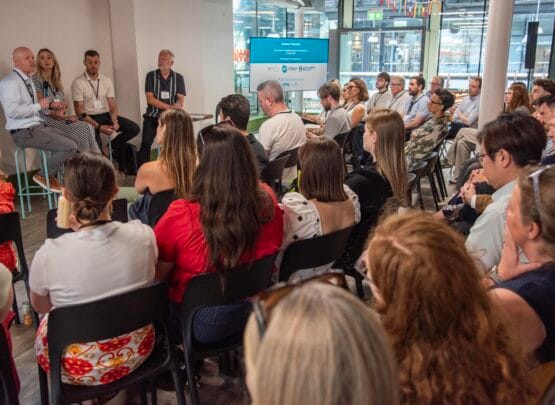
Here are some of our key take outs from the event:
1. A move towards growing food in the city
The inspiring Johan Jorgensen from Sweden Food Tech challenged our thinking on traditional farming, and local equalling sustainable. He tipped growing urban environments as the next big thing – so expect to see more indoor farming utilising Co2, and more proteins made from fresh air à la Solein.
2. Nestléis leading the way
According to the event, it’s three cheers for Nestlé who is leading the way, putting 2% of revenue back into R&D v the majority of food businesses who invest just 0.2%.
3. Vertical and tech-led farming is where it’s at
Four out of the top 10 on the Food Tech 500 list are either indoor farms, or companies which provide tech to maximise their productivity. We can’t wait to check out Growing Underground who sustainably grow fresh micro greens and salad leaves 33 metres below the busy streets of Clapham.
Planning for 2027? Don’t start with the marketing plan
September 2026
by Anita Murray, CEO, William Murray
For food, drink and hospitality businesses, 2027 budgets are starting to take shape. Campaigns are being mapped out and calendars are tentatively filling up with launches, events, content and communications activity.
Before deciding what marketing activity your business needs next year, there is a more important consideration: What does the business need to achieve – and what could get in the way?
The more specific the objectives and obstacles, the easier it becomes to make useful, strategic decisions about marketing and communications that will help businesses grow with greater certainty.
Six questions to take into your 2027 planning
What are our most important growth objectives?
Be specific about what the business needs to achieve. Which customers, markets, products or relationships matter most? Where does growth need to come from, and what would meaningful progress look like by the end of 2027?
Whether the ambition is to win new customers, enter a market, grow a category or create demand for innovation, the marketing plan needs a clear commercial destination.
What are the biggest obstacles to achieving them?
Where is growth most likely to get stuck? It could be competitive pressure, customer perception, differentiation, credibility, market position, lack of influence or something operational that communications needs to help address.
Identifying the obstacle changes the conversation from “What should we do?” to “What needs to change?”
Has our market position changed?
Markets move quickly. Competitors evolve, customer expectations shift and propositions that once stood out can become familiar. Ask whether the position that worked previously will still be compelling in 2027.
That means looking beyond your own brand. What are competitors now claiming? What do customers value? Where has the market become crowded? What new expectations have emerged?
What do our customers actually value now?
Planning often begins with what a business wants to say. A stronger starting point is understanding what customers need to hear, believe or experience before they will change behaviour.
Our 2026 From Visibility to Influence research found a clear gap between the messages suppliers believe they are communicating and how those messages can be experienced by operators. Suppliers talked about innovation, sustainability, partnership and understanding their customers. Operators told us they wanted clearer value, practical solutions, proof and transparency.
That gap has commercial consequences.
In a pressured foodservice environment, operators are already dealing with labour shortages, cost pressures, sustainability demands and supply chain challenges. Communications that add complexity or make broad claims without evidence are unlikely to earn much attention.
The implication for 2027 planning is important: understanding customer priorities should shape the communication strategy before channels and campaigns are selected.
Where do we need greater trust, authority or influence?
Awareness can tell you that people recognise a brand. It tells you much less about whether they trust it, value its expertise or will consider it when making a decision.
Our research found that operators and industry influencers respond strongly to credible evidence, practical application and genuine industry contribution.
Innovation, for example, has greater value when it demonstrates how it can make an operation easier, more efficient or more resilient. Sustainability claims become more credible when businesses can show evidence, acknowledge trade-offs and communicate progress honestly.
For businesses planning for 2027, this raises useful points: Where do we need to influence decisions, and what would give us the authority to do so? That might involve customers, chefs, procurement teams, wholesalers, industry bodies, media or other stakeholders.
Finally, what communications activity will make a difference?
Once the growth objective and obstacles are clear, the role of communications becomes much easier to define.
Perhaps the business needs stronger thought leadership to establish authority in a category. Perhaps it needs evidence-led communications to build credibility around a new proposition. Perhaps customer voices and practical demonstrations would do more to build confidence than another broad awareness campaign.
And sometimes the answer will be to do less. The important thing is that activity has a clear job to do.
Better planning starts further upstream
Visibility has value, but commercial growth depends on what happens after someone sees you. Do they understand your relevance? Do they believe your claims? Do they trust your expertise? Will they involve you in the conversation when a decision needs to be made?
Those questions deserve a place in the planning process.
Before you lock down your 2027 marketing plan, make sure you have identified what is most likely to get in the way of achieving your growth objectives. That gives you a strategic basis for deciding where communications, marketing and other forms of commercial activity can help you achieve growth with greater certainty.
Our Market Authority & Growth Roadmap is designed to help businesses take that step back: clarify the growth objective, identify the positioning, credibility, visibility and influence barriers that may be limiting growth, and establish where authority-building activity should focus next.
Planning for 2027? Talk to us about where growth could get stuck before you decide what activity comes next.