Insights & Trends

Harnessing the power of AI: the future of marketing

October 2023

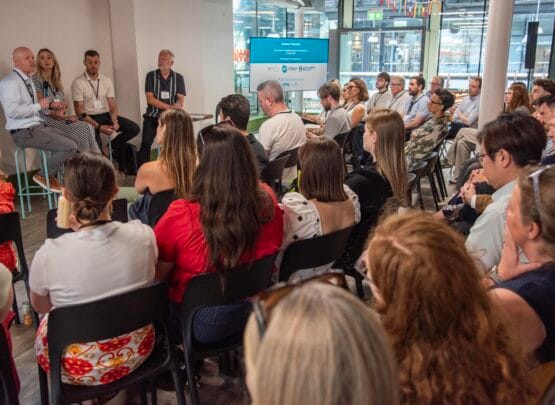
In the ever-evolving landscape of marketing, staying ahead of the curve is paramount. Yesterday I attended ‘The Marketing Meetup – How to effectively use AI to save your time’ webinar featuring Joe Glover, co-founder of The Marketing Meetup, and Billy Jones, VP marketing at Hootsuite.

This engaging session delved deep into the current state of Artificial Intelligence (AI) and how marketers can leverage it to their advantage.

Here’s a summary of the top tips…

Embracing the potential of AI

Experimentation is key: The discussion commenced with an introduction to AI, emphasising the importance of experimentation. AI, once a daunting concept, has now become a valuable tool for marketers.

Efficiency and creativity: According to Billy Jones, integrating AI into workflows enhances efficiency and creativity. It eliminates the time-consuming task of generating ideas, making content creation faster and more accessible.

Accelerating creativity: Particularly, non-visual creators benefit significantly, with AI bridging the gap and accelerating the creative process

Strategic integration of AI in marketing

Strategic research and segmentation: The panellists highlighted strategic areas where AI can revolutionise marketing. Strategic research and segmentation emerged as crucial aspects. AI functions as an assistant, swiftly compiling vast amounts of data into actionable insights.

Natural and informal inquiries: Moreover, AI facilitates natural and informal questions, transforming the way marketers interact with information. ChatGPT, a leading AI application, stood out among the recommended tools, especially when used in tandem with human creativity. Other mentions included.

Mitigating risks and ensuring data security

Prompt specificity and biases: Challenges such as prompting specificity and biases within AI responses were discussed. The importance of carefully formulating prompts and acknowledging biases within AI responses was stressed.

Data security: The question “Do you have to be careful when putting private information on AI applications? Where will my data be stored?” was asked by me, Olivia. Data security remains a paramount concern. Users were advised to choose applications with closed data sets and exercise caution when dealing with sensitive information. Whatever you put in is fed into that algorithm and is now public.

Human-AI synergy

Creative intuition: A critical takeaway from the discussion was the synergy between human creativity and AI capabilities. While AI excels at generating content and enhancing images, it lacks the creative intuition unique to humans.

Human input: AI, as noted by the experts, can refine and edit existing concepts but cannot generate truly groundbreaking, attention-grabbing ideas. Human input remains invaluable in sparking the unexpected brilliance that captivates audiences. Billy Jones said: “AI will only spit out things that have ever existed and have existed before.”

The future of marketing: A harmonious blend

Collaborative nature: The future of marketing lies in a harmonious blend of human creativity and AI’s processing power. AI can undoubtedly streamline processes, offer data-driven insights, and revolutionise content creation.

Augmenting human ingenuity: However, it is the human touch that infuses campaigns with authenticity, emotion, and innovative thinking. As marketers, embracing AI as a tool rather than a replacement is the key to unlocking unparalleled success in this digital age.

The ‘How to effectively use AI to save your time’ webinar highlighted the vast potential of AI.

In my opinion, AI is not just a technological marvel, but a catalyst for innovation. It doesn’t replace human creativity; instead, it amplifies our potential. As marketers, we must embrace this technology with open arms, understanding its strengths and limitations. Through this collaboration between human intellect and artificial intelligence, we pave the way for a future where creativity knows no bounds and efficiency becomes the norm.

As I marvel at the insights presented in this blog post, it’s both amusing and awe-inspiring to acknowledge that this piece is (partially!) the product of AI ingenuity.

Yes, you read that right – this post was sprinkled with my creativity, accuracy, clarity and editing magic, but at its core, it’s a brainchild of artificial intelligence, serving as a testament to the remarkable capabilities of AI. But only when paired with an expert human named Olivia.
Insights & Trends

QSRs – is a lack of local relevance stunting your growth?

June 2026

By Rachel Taylor, managing director, William Murray

I had a great day at the QSR Redcat Media and Awards Conference on 22 June 2026, listening to operators, brands and suppliers unpack the future of growth. 

More data. More tech. More channels. More pressure on margins. 

But walking away, one thought stuck with me:   

Most QSR brands aren’t struggling to grow; they’re struggling to matter where it counts. 

Growth in this sector rarely unravels in strategy decks or boardroom discussions. More often, it is won or lost site by site, in local communities and on local high streets. 

Customers clustered in their differing localities don’t experience “the brand” in the abstract. They experience that single location, in a specific moment, in the context of their everyday lives. And that moment is far more fragile than many assume. 

If the experience feels too generic, inconsistent or disconnected, the decision is simple: customers will be indifferent.  And no one wants that. 

So how do you win? 

Look at how the high street is shifting and being redefined. It’s no longer just a place of convenience. It’s evolved to be something more social, more experiential and more community-driven – a space of connection, routine and identity: 

  • where people go to break up their day 
  • where older audiences seek a sense of connection over something simple such as a coffee and a slice of cake 
  • where date nights, small celebrations and everyday rituals play out 
  • where younger consumers spend time, choosing brands that say something about who they are because it’s social currency. 

This all points to the evolving role QSR brands need to play. The question has moved beyond: “How do we drive footfall?” It’s now: “How do we earn a place in people’s lives locally?” 

Are franchisees the most underutilised growth lever? 

Many QSR brands are stronger than ever centrally – with sharper positioning to more sophisticated channels.  But that strength doesn’t always translate consistently at a local level. 

This is where the franchisee comes in. 

They sit closer to what’s actually happening in local markets than any central team ever can. They see the nuances: how footfall shifts, how local competitors behave, what resonates culturally, customer profile types and what falls flat. 

That’s the missed opportunity when it comes to your comms programme.  

When franchisees are properly engaged and contribute to their localised comms plan, believe in it and are equipped to bring it to life, the difference is tangible. A QSR branch becomes embedded within its community, teams operate with more confidence and customers respond differently 

Why community comms is the growth boost needed 

This is where communications plays a far more important role in unlocking growth than it’s usually given credit for. 

Getting under the skin of each community to shape bespoke campaigns that capture attention and win mindshare makes a huge difference in a fiercely competitive market.   

Locally relevant comms strategies should not be viewed as a quick customised bolt-on task.  They are a growth strategy because no two locations behave the same or expect the same things. No single playbook can account for every local nuance. 

In today’s market, local relevance is the strategy. 


Want to hear more? 

If you’re looking at how your brand performs site by site and where the gaps are between strategy and reality, it’s worth a conversation. 

At William Murray PR & Marketing, we help QSR brands close that gap, building communications strategies that actually drive behaviour, consistency and growth on the ground.

Insights & Trends

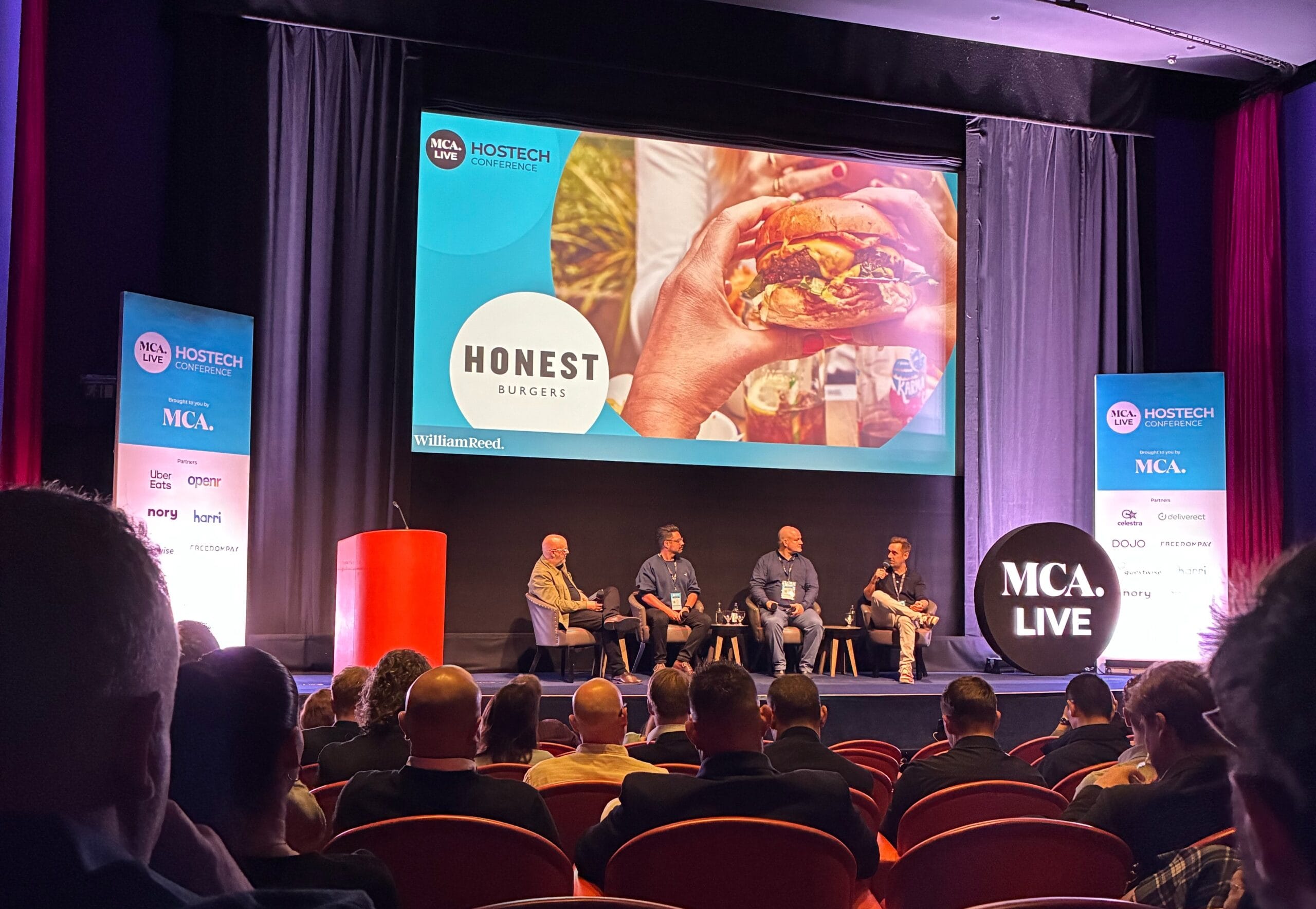
Hospitality tech has moved on. Operators are no longer buying hype

May 2026

By Jake Brill, consultant, William Murray

Hospitality technology has never had more attention. AI, automation, data platforms, loyalty tools and team tech are all moving quickly, and the pressure on operators to keep up is only growing. 

But one thing was clear at HosTech 2026 – operators are not interested in technology for technology’s sake. 

Across sessions covering AI, data, loyalty, labour, growth and marketing, the same question kept coming through: what problem does this actually solve? 

That shift matters. In a sector still navigating rising costs, labour pressure, tighter margins and changing guest expectations, technology is being judged less on how impressive it sounds, and more on whether it makes hospitality businesses measurably better. 

Practical beats futuristic 

AI was everywhere at HosTech, but the most compelling examples were not the most futuristic. They were the most useful. 

Operators are already exploring AI for troubleshooting, reporting, forecasting, scheduling, queue management, product availability, personalisation and guest service. But the mood was not blind optimism. The strongest examples were grounded in clear use cases, clean data and team adoption. 

That distinction is important. 

AI is not a magic fix for broken systems. It only works when the foundations are right. If the data is poor, the problem is unclear or teams do not understand why a tool has been introduced, adoption quickly stalls. 

For hospitality brands, the opportunity is significant – but the starting point should not be “how do we use AI?” It should be “where are we losing time, money or consistency, and could AI help?” 

Data is only valuable if it drives action 

Data was another recurring theme. Most hospitality businesses are not short of it. They have sales data, booking data, loyalty data, guest feedback, labour data, Wi-Fi data, CRM data and more. 

The issue is not collection. It is translation. 

The operators getting it right are moving away from static dashboards and oversized reporting packs. Instead, they are looking for insight that reaches the right person, at the right moment, in a format that helps them make a decision. 

That is a crucial point for suppliers and tech partners. More information is not always more useful. In a busy hospitality environment, the best data does not just explain what happened. It helps teams decide what to do next. 

Growth needs simplicity, not more complexity 

The sessions from fast-growing brands including Popeyes, Fireaway, Sandwich Sandwich and Dave’s Hot Chicken reinforced another important lesson: scaling does not mean adding more systems. 

In fact, the bigger a business gets, the more damaging disconnected technology can become. 

The strongest tech stacks are not necessarily the biggest or the flashiest. They are the ones built around how the business actually runs, with systems that talk to each other, support frontline teams and stay dependable under pressure. 

For growing operators, that means making tough choices. What should be built in-house? What should be bought from a specialist? What adds value? And what simply adds another login? 

The answer will look different for every business, but the principle is the same: technology should make operations easier, not heavier. 

The human side still matters 

One of the strongest themes from the day was people. 

Whether the discussion was around AI, team tech, loyalty or marketing, the same truth kept surfacing: tools only work if people use them. 

That applies to employees as much as guests. Managers need platforms that reduce admin. Frontline teams need to understand why new systems matter. Guests need digital experiences that feel relevant, not robotic. 

The best framing from the day was technology as a co-pilot. Not replacing hospitality, but removing friction. Not taking over the human parts of the experience, but giving teams more time and confidence to deliver them properly. 

That is where the real opportunity sits: using technology to make hospitality more efficient, without making it feel less human. 

Hype can launch a brand. It cannot sustain one 

The final marketing session, featuring Sandwich Sandwich and Dave’s Hot Chicken, brought a different but connected perspective. 

Both brands showed the power of hype, social content, user-generated momentum and community-led growth. Queues, viral posts and influencer attention can all create huge launch energy. 

But the session also made clear that hype has a shelf life. 

Long-term performance depends on product quality, consistency, speed of service and a brand personality that does not disappear as the business scales. The brands that hold attention are the ones that give people something worth sharing – and then deliver when customers turn up. 

For marketers, that is the key lesson. Hype is not just about noise. It is about creating the conditions for people to care, talk, visit and return. 

What this means for hospitality brands 

HosTech 2026 painted a picture of a sector becoming more disciplined in how it approaches technology. 

The excitement around AI, data and automation is still there, but operators are asking harder questions. Does it solve a real problem? Will teams use it? Can it scale? Does it improve the guest experience? Does it protect margin? Does it make the business better? 

That should be the filter for every hospitality technology conversation. 

The future of hospitality tech will be defined by the tools that solve real operational problems, support teams and help brands deliver better experiences more consistently.